At the meter
Chicago still has a great many lead service lines, and plenty of them run into houses and two-flats that look perfectly ordinary. The pipe that brings water from the main in the street to your meter may be lead even if every pipe you can see in the basement is copper. This page shows how to check, what the city offers, and what replacing the line yourself involves.
Best Plumber In Chicago is a service that connects people with independent local plumbing contractors. It is not a plumbing company: the plumber who contacts you gives any price and does any work, and you decide whether to hire them.
Is your line likely to be lead?
The City of Chicago says that if you live in a house or two-flat built before 1986, there is a high likelihood your water service line is made of lead, unless it was replaced during a renovation or addition. Most bungalows in the city were built between 1910 and 1940, so in large parts of Chicago a lead line is the starting assumption, not the exception.
The scratch test at the meter
You can check the pipe in a few minutes with a key and a fridge magnet. The city describes the same steps.
- Find the water meter or the main shutoff valve. In most houses it is in the basement at the wall that faces the street.
- Find the pipe that comes into the meter or valve from the wall. That is the service line.
- Hold a magnet to it. A magnet sticks to galvanized steel. It does not stick to lead or copper.
- If the magnet does not stick, gently scratch the pipe with the edge of a key. Lead is soft and shows a shiny silver scratch. Copper shows a penny color.
- Note what you found and take a photo. The city asks residents to report the material to help build its inventory of where lead lines are.
Careful with the scratch
Scratch lightly, wash your hands after, and do not file or cut the pipe. If you are not sure what you are looking at, a plumber can tell you on a visit.
City programs compared
The city runs several voluntary programs, and some replacements happen whether you apply or not. The table summarizes them as the city’s Lead Safe Chicago site described them when this page was written. Programs and terms change, so check the current details on leadsafechicago.org before you rely on them.
| Program | Who it is for | What the owner pays | Who does the work |
|---|---|---|---|
| Equity Lead Service Line Replacement | Homeowners living in the home they own, with household income below 80% of the area median; priority for homes with children 18 and under or high lead levels in a city water test | Nothing: a full replacement from the main into the home plus a water meter, which the city values at $16,000 to $30,000 | A city-provided contractor |
| Homeowner-Initiated Program | Residential homeowners who choose to hire their own contractor for a full replacement, as a standalone project (not part of a renovation); commercial and mixed-use buildings are not eligible | The contractor’s price; the city waives up to $5,000 in permit fees, connects the new line to the main and provides a water meter if needed | A licensed plumbing contractor you hire |
| Breaks and leaks | Any property whose service line breaks or leaks and must be repaired | Nothing: the city replaces both the private and public sides | The city, after you report it to 311 |
| Block-long replacement | Homes on blocks where the city is replacing aging water or sewer mains | Nothing | The city, as part of its main work |
| Fully private replacement | Any owner who wants it done on their own schedule and does not use a program | The contractor’s price and the permit fees | A licensed plumbing contractor you hire |
If your line breaks or leaks, the city says calling 311 is mandatory, and it will schedule the replacement of both sides. A state law now bans replacing only part of a lead service line, so whenever a lead line is replaced, the whole length from the main to the house is done.
What a replacement involves
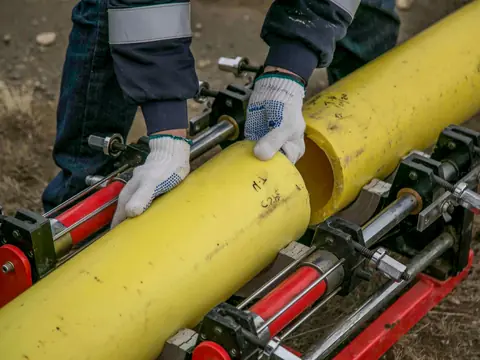
A new copper line runs from the water main in the street all the way into the house. There are two ways to do it. An open trench means digging from the house through the parkway to reach the main. A trenchless method pulls or bores the new line underground with only a few pits, which disturbs less of the yard and parkway. Which one fits depends on the depth of the line, the distance, what is on top of it and the contractor’s equipment.
On the Homeowner-Initiated Program the city describes the order like this: verify the line is lead, hire a licensed plumber from the city’s list, the contractor tells the Department of Buildings the job qualifies for the fee waiver, you meet the contractor to agree how the work and the restoration of the yard will be done, the contractor replaces the line and fits the meter if needed, a city inspector reviews it, and Water Management staff connect the new line to the main.
What drives the cost of a private replacement
- Distance from the main to the house and how deep the line runs
- Open trench or trenchless, and what has to be dug up and put back
- Where the line enters the basement and how much wall or floor work that needs
- Whether a meter has to be installed
- Permits from other agencies, which the city notes may apply depending on where the home is
Found lead at the meter? Tell us your neighborhood and a city-licensed plumber can contact you about replacing it.
Questions to ask a plumber about a lead line
- Your City of Chicago plumbing contractor licence? The city points homeowners to its list of licensed plumbers, and the city licence is required for plumbing work inside the city.
- Open trench or trenchless for my house, and why?
- Will you handle the fee waiver notice to the Department of Buildings?
- How much of the yard, parkway and basement will you restore, and to what standard?
- How long will the water be off?
- What filter and flushing do you advise afterwards?
After the work: flushing and filters
Construction can shake lead particles loose for a while. The city recommends flushing the water as instructed after work and using a filter certified to NSF-53 for lead removal for the first three months after any construction. Free follow-up lead testing is available through 311 or chicagowaterquality.org.
Day to day, before the line is replaced
The city’s everyday advice while a lead line is still in place: run the water for at least five minutes if it has not been used for six hours or more, which everyday use like showers and laundry counts towards; drink and cook only with cold water, because hot water dissolves lead more quickly; and remember that boiling does not remove lead.
Renters and two-flat owners
The city’s programs are written for homeowners, and the Equity program asks that you live in the home you own. If you rent, you cannot apply in your landlord’s place, but the everyday advice on flushing and cold water applies to every tap, and free water testing is open to residents through 311. Owners of a two-flat who live in one unit should read each program’s terms closely for how they treat the building.
The larger picture
Illinois law requires water suppliers to inventory and replace lead service lines over a long schedule, and the EPA invited a $336 million WIFIA loan for Chicago’s water main and lead service line replacement program. A line on your street may be replaced eventually as part of that work. Owners who do not want to wait can use the programs above or hire a licensed plumber directly.
Questions people ask
How can I tell if my Chicago water line is lead?
Find the pipe coming into the meter from the street wall. A magnet will not stick to lead, and a light scratch with a key shows shiny silver. Copper shows a penny color, and galvanized steel attracts a magnet.
Will the City of Chicago replace my lead pipe for free?
It may, if you qualify for the Equity program, if your line breaks or leaks and you report it to 311, or if your block is part of a water main project. Check current terms on leadsafechicago.org.
What does the Homeowner-Initiated Program cover?
You hire your own licensed contractor for a full replacement. The city has described waiving up to $5,000 in permit fees, connecting the new line to the main and providing a water meter if needed.
Can a plumber replace only part of the lead line?
No. A state law now bans partial lead service line replacement. The whole line, both the private and public sides, has to be replaced.
Is this site part of the city’s program?
No. Best Plumber In Chicago is a service that connects people with independent local plumbing contractors. It is not a plumbing company or a city program.
Plumbing problem?
Tell us what is happening and where, and an independent Chicago plumbing contractor can contact you.
Best Plumber In ChicagoChicago and near suburbs