water meter moving no water on
A water bill that jumps for no reason, or a meter dial that keeps turning when nobody is using water, means water is going somewhere. Often it is a running toilet. Sometimes it is a pipe you cannot see. The meter in your basement can tell you which, in about half an hour.
Find and read the meter
In most Chicago houses and two-flats the meter is in the basement where the water line comes through the front wall from the street, next to the main shutoff valve. Most meters have a small leak indicator, often a little triangle or star, that spins at even a slow flow, plus a sweep hand or digital display.
The thirty-minute test
- Turn off every tap, appliance and fixture that uses water. Make sure the washer, dishwasher, ice maker and any humidifier are idle.
- Look at the leak indicator. If it is moving, water is flowing somewhere right now.
- If it is still, note the reading, wait thirty minutes without using water, and read it again.
- If the reading changed, there is a leak. Now narrow it down.
Narrowing it down
Toilets first
A toilet with a worn flapper can run quietly all day. Put a few drops of food coloring in the tank and wait fifteen minutes without flushing. Color in the bowl means the flapper is leaking. It is a cheap part and one of the most common causes of a high bill.
Shut the valves one by one
Close the small shutoff valves under each toilet and sink. If the meter stops, the last valve you closed was on the leaking line. If it keeps going with all of them closed, the leak is in the pipes themselves or in a fixture without its own valve.
Inside or outside the house
If your house has a valve just inside the wall after the meter, close it. A meter that still moves with that valve closed points to a leak between the meter and that valve. A meter that stops points to a leak inside the house. Leaks on the street side of the meter usually do not register on it at all, which is why a wet parkway or sinking patch of lawn is worth reporting even if your meter is still.
Usual culprits in older Chicago houses
- Toilet flappers and fill valves
- A water heater relief valve that drips into the floor drain
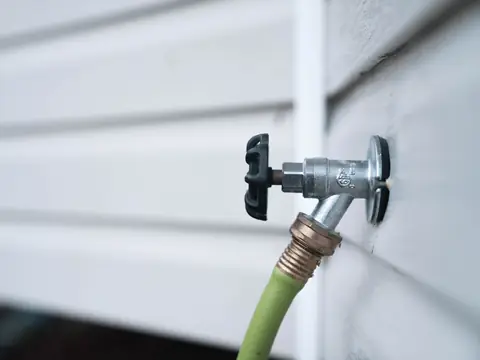
- A hose bib or outdoor line that split in a freeze and leaks inside the wall
- Old joints where copper meets older steel or brass
- A pipe under a basement slab or in a wall, which shows only as damp plaster or a warm spot on the floor
Most bungalows here were built between 1910 and 1940, and decades of repairs leave plenty of joints. The frozen pipe repair page covers lines that split in the cold, and the lead service line page explains the pipe from the street to the meter.
Reading a high bill
A bill that is higher than usual is not always a leak. Compare it with the same months of past years, because watering a garden or filling a pool shows up seasonally, and a full house of guests uses more than you might think. If the use is steady and still high with nothing obvious to explain it, run the meter test above. It tells you in half an hour whether water is going somewhere when nobody is using it.
Keep a note of the readings and the dates you checked. If a plumber finds and fixes a leak, the before and after readings show the difference, which is useful to have if you need to ask the water department about the bill.
When to call a plumber
Call when the meter moves with every valve shut, when you see damp plaster, a warm floor or a wet patch outside, or when a toilet repair does not stop the leak. A plumber can trace a leak with listening equipment, pressure tests or a camera, often without opening more wall than needed. Inside Chicago the work needs a City of Chicago plumbing contractor licence.
Best Plumber In Chicago is a service that connects people with independent local plumbing contractors. Send the form, say what the meter is doing, and a plumber working in your area can contact you.
Questions people ask
Can a running toilet really raise a water bill?
Yes. A worn flapper can let water run past all day without a sound. The food coloring test shows it in fifteen minutes.
Who fixes a leak before the meter?
Report a wet parkway or street leak to 311. A leak on your own service line between the street and the house is usually the owner’s to fix with a licensed plumber.
Plumbing problem?
Tell us what is happening and where, and an independent Chicago plumbing contractor can contact you.
Best Plumber In ChicagoChicago and near suburbs